
The White City & it’s bauhaus architecture
Having grown up in Mumbai for three decades, certain neighborhoods of the city captured my attention and affection early on. From the wide streets around Matunga’s Five Gardens to the sweeping promenade of Marine Drive, I was deeply drawn to the visual language of these buildings.
Long before I became a student of architecture, I wondered why these structures felt so much more charming than the rest of the city. Every time I visited my aunt’s place in Matunga, I loved looking at her building and being in her bedroom with its curved wall. How different it felt from my parents’ house with its straight walls.
I can explain it now: it was the three-story proportions balanced perfectly within their plots; it was the shade of the beautiful rain trees lining the curb that offered glimpses of the facades; and it was the ironwork on the windows, designed not in standard grid patterns, but in cellular exoskeletons that mirrored the overall form of the building. Rounded balconies and curved corners with horizontal bands wrapped gracefully around each facade. This was Mumbai’s Art Deco style, which exploded across the city in the 1930s.
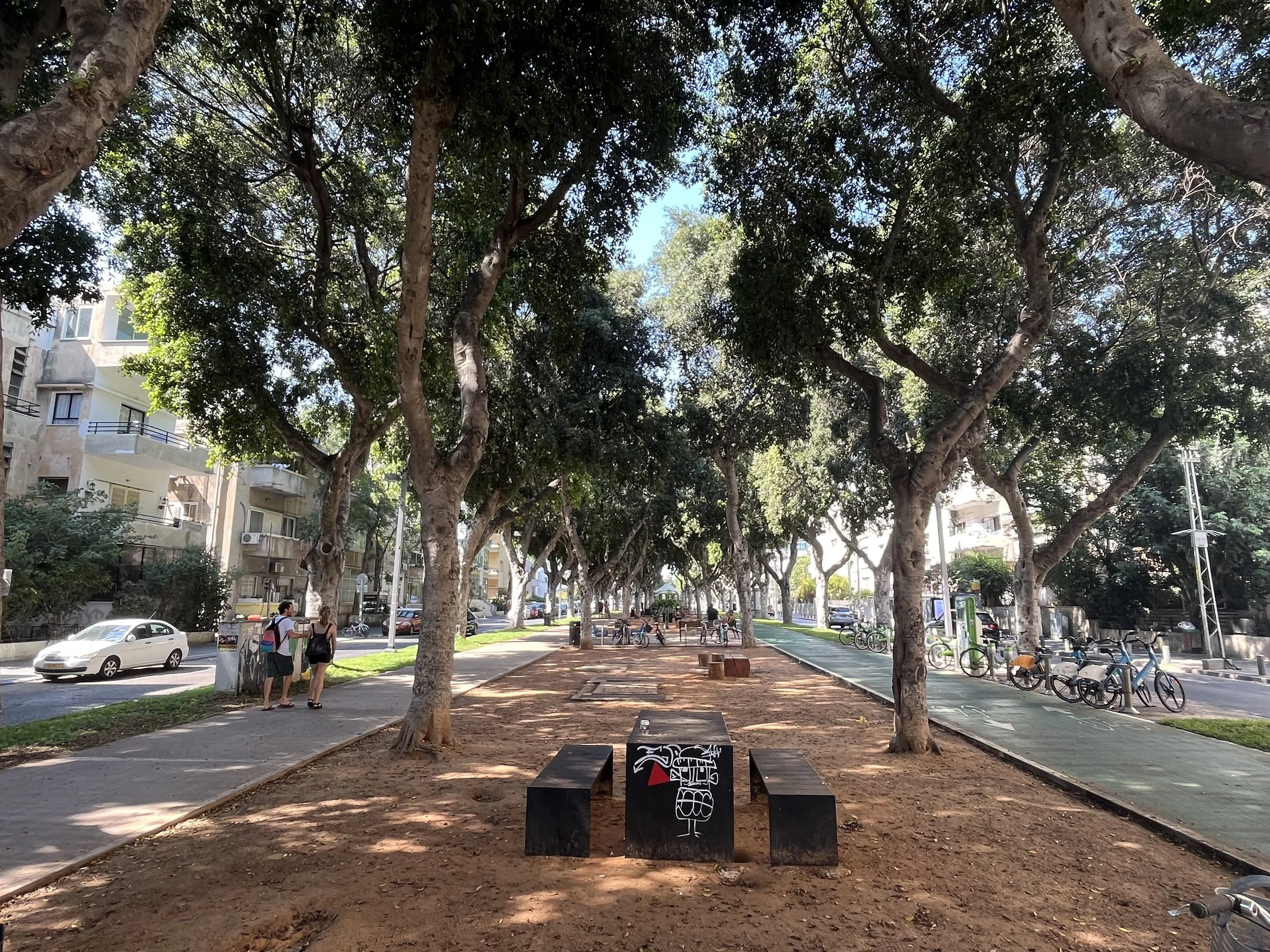
The Tree Canopy along Rothschild Boulevard. Image Credit: Manali Shah
Fast forward to July 2023. I was walking through the heat of Tel Aviv, navigating the quiet lanes of the city, when an unexpected feeling of familiarity stirred a subtle homesickness in me.
Standing beneath a dense canopy of trees on a long, straight boulevard, past modern glass towers, my eyes landed on a modest building tucked into a corner.
It was a three-story box with rounded edges, featuring distinct balconies on each level and proportional openings thoughtfully designed for the climate. Sitting quietly among high-rises, it held a calm, dignified presence.
That was when the surprise unraveled: Tel Aviv and its iconic Bauhaus architecture.
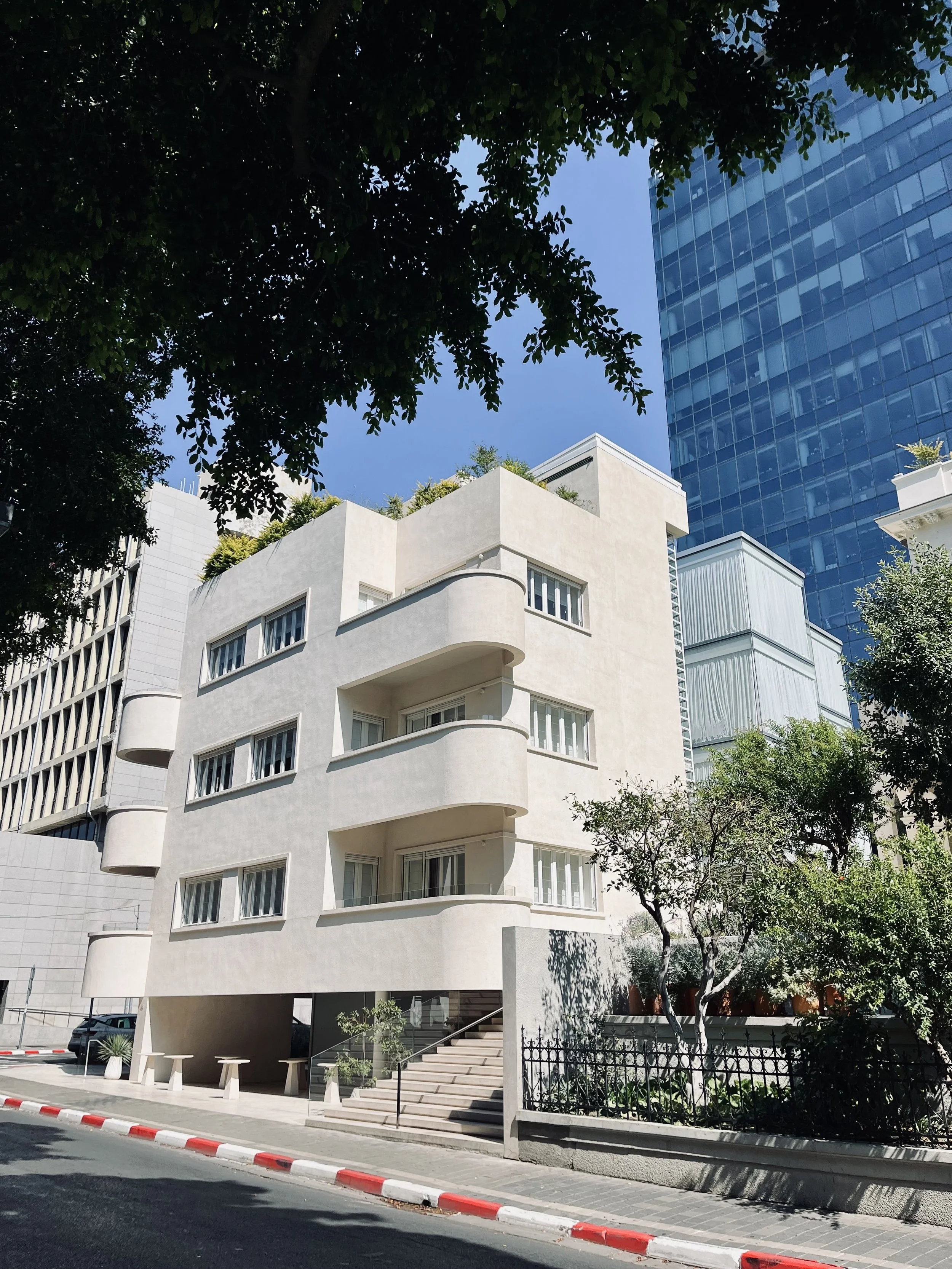
48 Rothschild Blvd. Image Credit: Manali Shah
The Bauhaus style was brought to Middle East in the 1930s by Jewish architects who had studied and taught at the Bauhaus school in Germany before fleeing Nazi persecution. Over time, a localized adaptation emerged in Tel Aviv—characterized by white, box-shaped forms, flat roofs, clean lines, gentle curves, pilotis, and open interior layouts. More than 4,000 Bauhaus-style buildings were constructed, giving Tel Aviv one of the highest concentrations of Bauhaus architecture in the world.
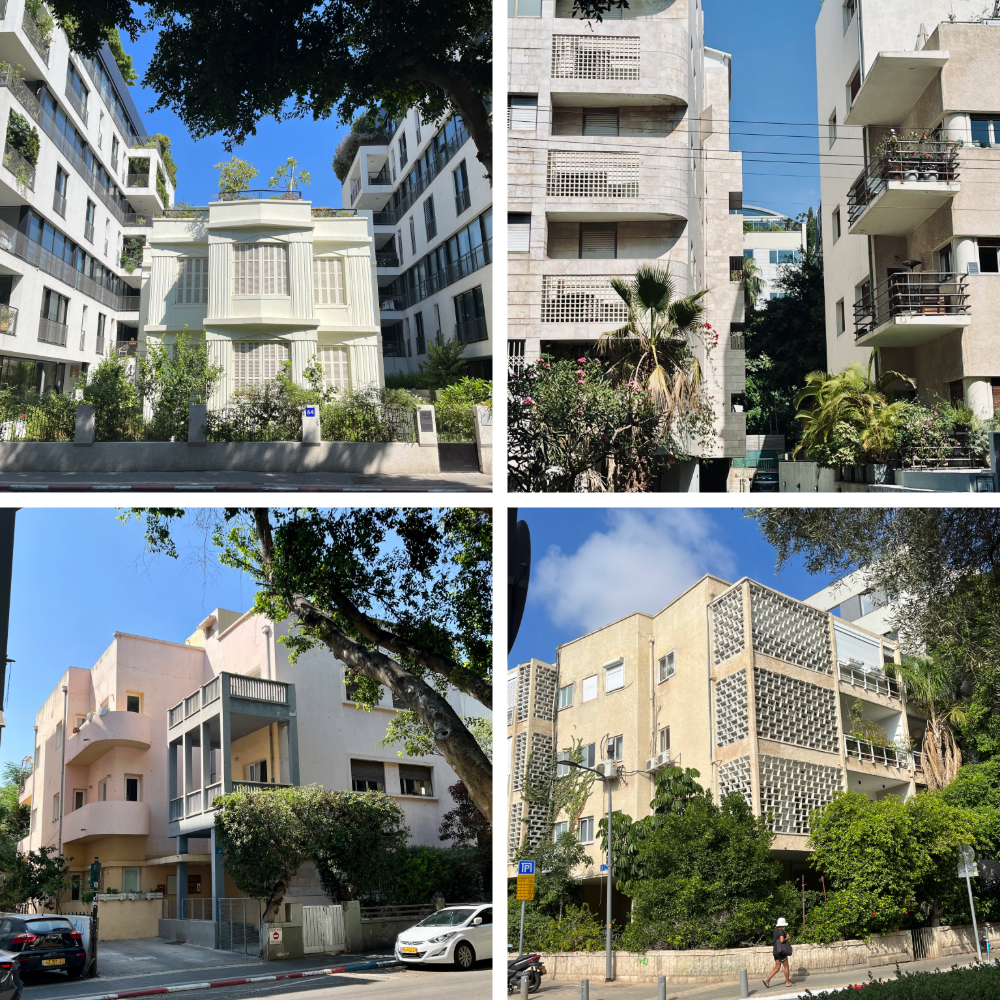
Snippets of Bauhaus Architecture. Image Credit: Manali Shah
In the 1930s, a parallel architectural revolution took place in both Tel Aviv and Mumbai. The urban image of both cities transformed into a modernist tapestry of new city grids, neatly laid-out plots, uniform footprints, and controlled building heights, punctuated by expressive facades. While Tel Aviv has carefully preserved its "White City" heritage, its eastern cousin in Mumbai faces a harder struggle to retain its past amid intense overpopulation and rapid redevelopment.
Back on my stroll down Rothschild Boulevard, under the shade of massive trees, history unfolds on either side of the street. The avenue is thoughtfully proportioned to encourage people to savor the architecture—featuring a wide central boulevard for pedestrians, cyclists, play areas, and park benches, framed by quiet sidewalks and roadways on the outer edges.
Adjacent buildings, each with distinct balcony profiles, seem to carry on an intimate conversation across the street. Elsewhere, glimpses of an old, prestigious relic peek out from between contemporary glass structures. Tree roots stretch and grow around sidewalks, surviving the unpredictability of the urban landscape, while cement screens (jaalis) add rich architectural texture to facades while thermally shading the interiors.
Continuing down this culturally rich boulevard, the walk leads through vibrant neighborhoods where daily life overlaps effortlessly—juice stalls tucked under tree canopies, neighborhood parks, kids zooming across on scooters, and lovers sharing picnics on mats near lively thoroughfares.
Eventually, the long stroll opens up to the Mediterranean coast and a bustling seaside promenade. Wide walkways give way to open-air lounges serving hookahs or fresh limonana, public outdoor gyms, and ping-pong tables. Every few blocks, a whimsical or utopian building disrupts the Bauhaus rhythm, resisting any easy stylistic categorization.
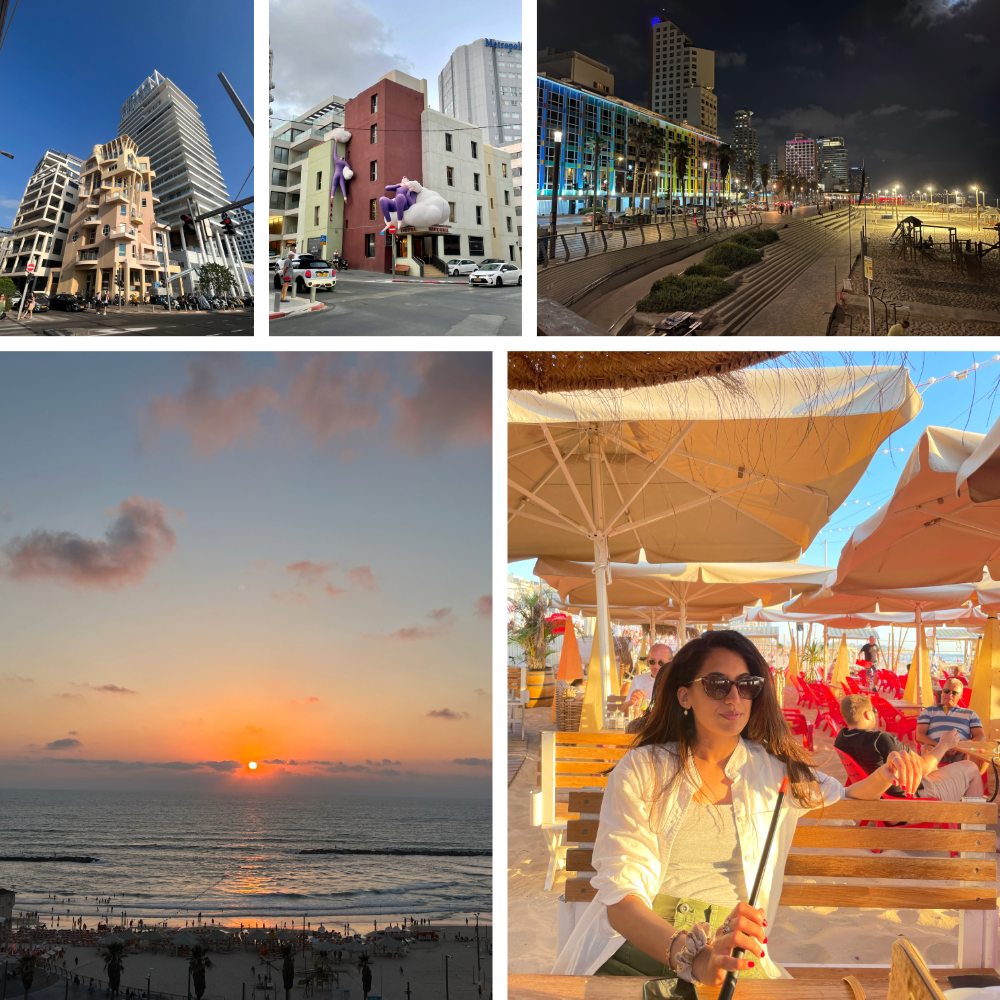
Given the shared coastal geography, climate, and historical timeline, Tel Aviv and Mumbai feel like distant architectural cousins. Seeing how seamlessly human-centric design was woven into Tel Aviv makes it easy to imagine similar urban planning principles adapted for old Bombay.
My hope is that Mumbai takes notes from its Mediterranean counterpart and preserves its rich Art Deco lineage as a living, enduring chapter in the story of the city and also learning how to evolve its urban skin over time.
Tel Aviv surprised me. I arrived with no expectations and little research, but the city left an indelible mark. I departed deeply enriched by the city’s vitality, inspired by the residents' uninhibited carpe diem mindset, and holding a small scratchpad featuring a beautiful illustration of an iconic Bauhaus building.
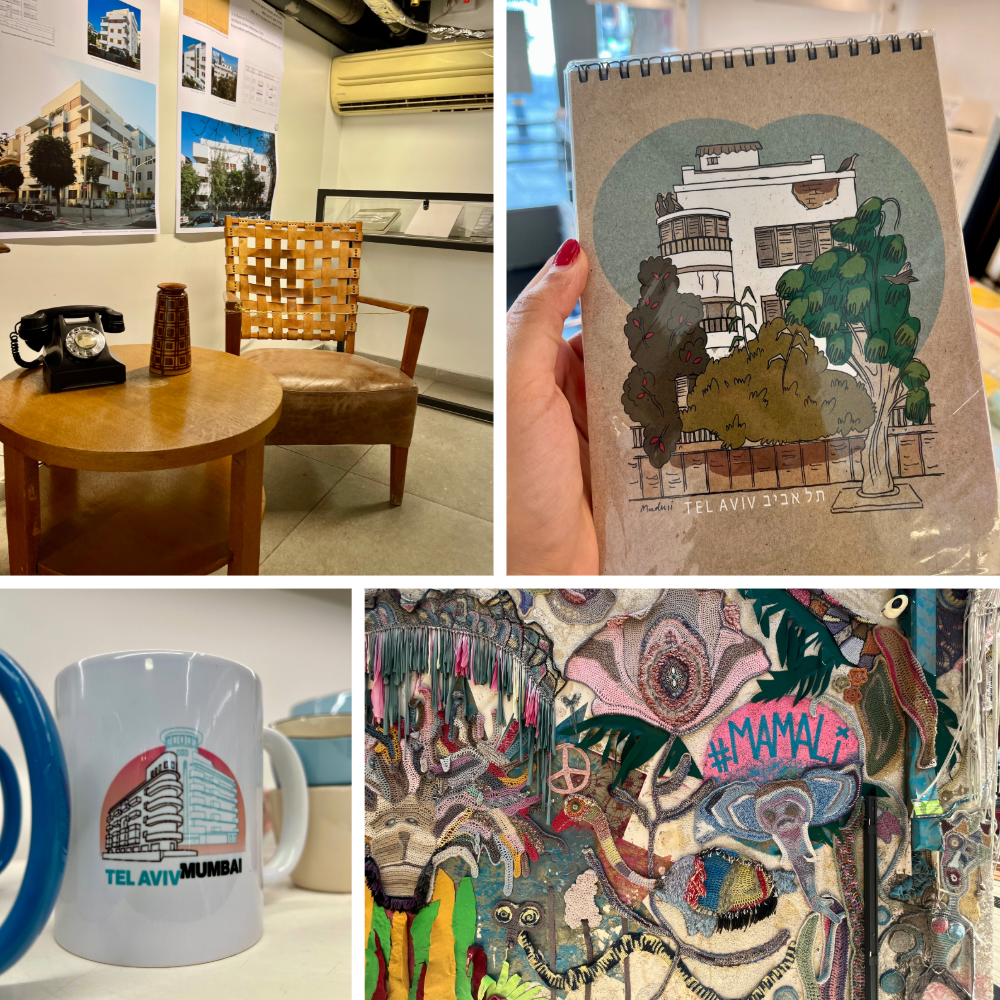
Murals, Moments and Mementos. Image Credit : Manali Shah
